Board game cafés
Cafés with a shelf of games: you pay for the time or a cover charge, and the staff help you pick a game and explain the rules.
Board games
Short answer: look for open game nights at board game cafés, game shops and in your city’s gaming chats — most of them let you join a table without knowing anyone. Want your own game night? You need a place with a table, 4–6 players per table and a Telegram group where the bot keeps the list: seats by the number of tables, a waitlist and reminders.
Cafés with a shelf of games: you pay for the time or a cover charge, and the staff help you pick a game and explain the rules.
Many board game shops run weekly game nights and demo days — a good place to try new games and meet regular players.
Players gather in Telegram and on meetup sites: “who’s up for Terraforming Mars on Saturday?”. Look for board game chats in your city.
A game night needs a table, a few games and the right number of people: too few — the game doesn’t start, too many — someone sits and watches.
a café with big tables or someone’s home. A regular night — “every Thursday at 19:00” — is easier to keep going than one-offs.
most games are for 4–6 players, so one table is about 6 seats and two tables are 10–12. That’s your limit.
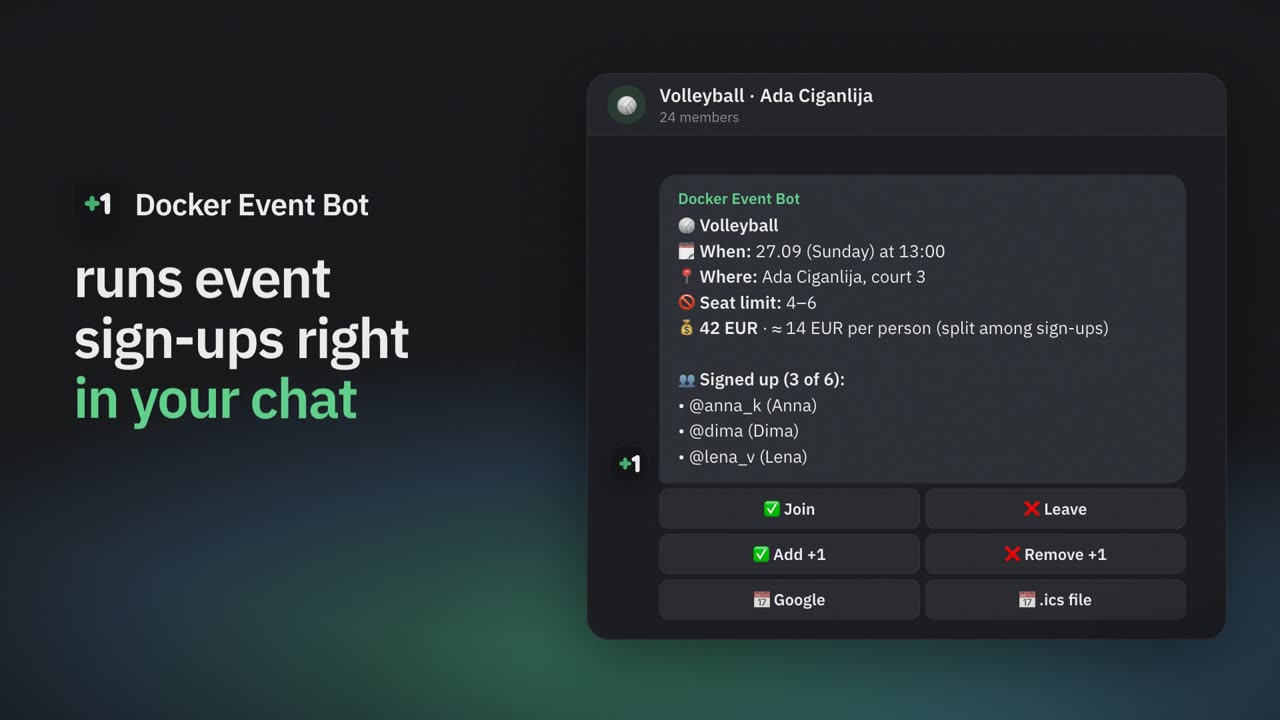
with a seat limit, the café fee to split and a description: what you’re playing and whether to bring your own games.
The card shows who’s coming. When the table is full, people join the waitlist; someone drops out — the next person gets the seat.

We’re playing Carcassonne and Codenames. Bring your own games too!
A game night card: 6 of 6 seats, one person on the waitlist, the café fee split per person.
Set the limit to the seats at your tables — no seventh player squeezed into a game for six.
Table full — people join the waitlist. Someone drops out — the next person gets the seat and a personal message.
The description sits in the card: the games for the evening, “bring your own”, “beginners welcome”. It also goes into reminders and the calendar.
Enter the table or room fee — the card shows each person’s share and recalculates it as people sign up. Money doesn’t go through the bot.
“Add +1”: a friend without Telegram takes a seat and is counted in the limit.
A regular game night: the bot posts the new card on schedule by itself and reminds everyone before the start.
It depends on the games: most are for 2–4 or 4–6 players, while party games like Codenames or Dixit work for 6–10. Count about 6 seats per table and set that as the limit — the rest will join the waitlist.
Pick a place and a night, choose a few games, create a Telegram group and an event in Docker Event Bot (@DockerEventBot) with a seat limit and a description. People sign up with a button, and you see who’s coming. All the ways compared — in the guide to sign-ups in Telegram groups. It’s free, and players don’t install anything — Telegram is enough.
Enter the total and the currency in the event settings — the card shows the share per person and recalculates it as people sign up or leave. The bot only does the math: you pay the café yourselves.
They join the waitlist. When someone leaves, the next person gets the seat automatically, with a personal message. If the waitlist grows, open a second table: raise the limit, and the people waiting move into the list.
Yes: the event has a description of up to 500 characters — the games for the evening, “bring your own”, “beginners welcome”. In the card it’s a collapsed quote under the time and place; it also goes into reminders and the calendar. Change it, and people who signed up get a message showing what changed.
Add the bot to your group — the first game night card is a minute away.