Mafia clubs
Clubs run regular evenings with a host and often a rating; newcomers are usually welcome and get the rules explained before the first game.
Mafia (Werewolf)
Short answer: Mafia (also known as Werewolf) is played at Mafia clubs, board game cafés and bars that run game nights — look in your city’s chats and social media. To host your own you need a host and about 10 players. The game only works with a full table, so a minimum and a waitlist matter more here than almost anywhere — a Telegram group and the bot keep the list.
Clubs run regular evenings with a host and often a rating; newcomers are usually welcome and get the rules explained before the first game.
Board game cafés and bars host Mafia nights on set days — check their schedules and social media.
Players arrange games in Telegram: “we need two more for tonight”. Look for Mafia and board game chats in your city.
Mafia lives or dies by the headcount: a classic game is 10 players plus a host. With seven the roles don’t add up; with fifteen someone sits out the whole round.
a host who knows the rules and a room with a table for 10–12: a café, a bar’s back room, someone’s home.
say, at least 10 and no more than 12. A day before, the bot tells the organizer if the minimum isn’t reached — there’s still time to invite people or move the game.
a regular one — “every Friday at 20:00” — with a description: who hosts, which rules, beginners welcome.
The card shows how many are coming and the minimum still to reach. Extra players join the waitlist and move up when someone drops out.

Host: Artem. New players — we’ll explain the rules before the first game.
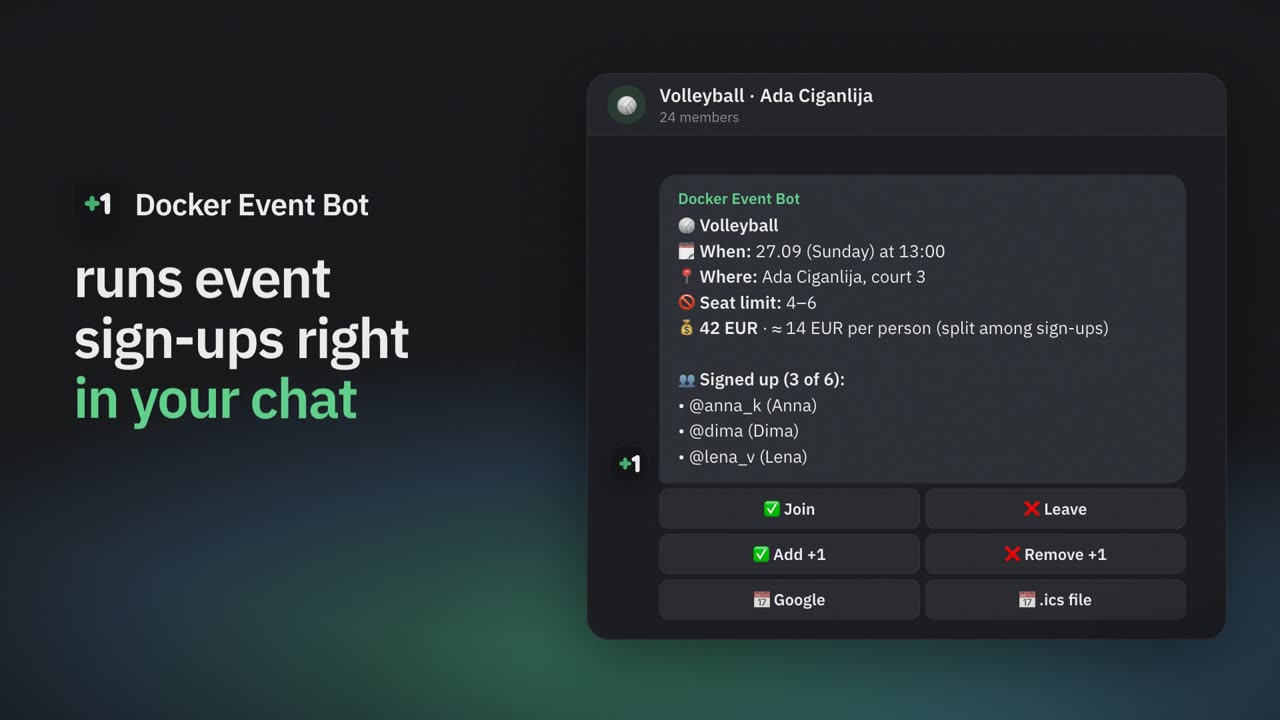
A Mafia night card: 8 of 12 signed up, the minimum is 10.
“8 of 12 · minimum 10” right in the card: everyone sees whether the game is on.
A day before, if the minimum isn’t reached, the bot messages the organizer: invite more people, move or cancel the game.
All seats taken — the next players join the waitlist and get a seat when someone drops out, with a personal message.
The description in the card: who hosts, which rules you play by, whether beginners are welcome.
Up to three reminders in private messages, with a nudge to free the seat if plans changed — so the table isn’t short at the last minute.
Organizers see who dropped out at the last minute — it matters when one no-show breaks the game for everyone.
A classic game is 10 players plus a host: 7 townspeople, including the detective (sheriff), and 3 mafia. Casual games work with 7–8. In the bot, set a minimum of 10 and a maximum of 12 — extra players join the waitlist.
No: the bot gathers the players, and the host deals the roles — with cards, as usual. That way nobody’s role ends up in a chat or on a phone screen.
A host, a place with a table, a Telegram group and an event in Docker Event Bot (@DockerEventBot) with a minimum and a maximum. People sign up with a button, and a day before you know whether the table is full. All the ways compared — in the guide to sign-ups in Telegram groups. It’s free; if you pay for the room, enter the amount and the card shows each person’s share.
The next person on the waitlist gets the seat and a personal message. Close to the start the bot asks the player to confirm before leaving, and the organizer sees who dropped out late.
A day before the start the bot messages the organizer that the minimum isn’t reached. There’s time to call more players in the chat, move the game — everyone signed up gets a message showing what changed — or cancel it, and they’ll get a message too.
Add the bot to your group — the first game night card is a minute away.